Are we going to do what it takes? - Lilian Kioko
Lilian Kioko, a clinician and mother of a child with type 1 diabetes, leads with empathy and purpose, helping others manage diabetes. In Kenya’s Kagundo sub-county, she coordinates patient-led peer groups that build self-management skills, strengthen continuity of care, and remind people living with diabetes and hypertension that they are not alone.

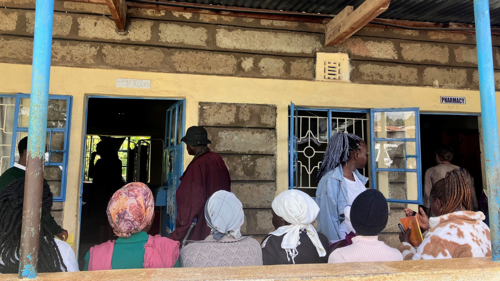
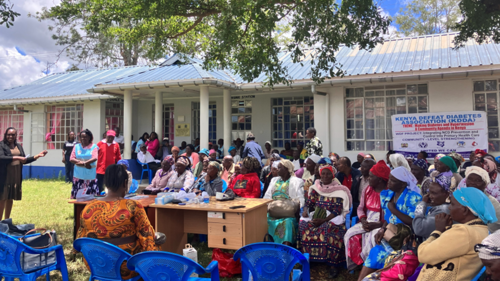
Under the shade of a Jacaranda tree at the level 3 health centre where care is never far away, the Mukunike diabetes and hypertension peer support group meets once a month. The group hums with quiet conversation, while the moderator shares self-care knowledge.
Lilian, a clinician, and the Kangundo sub-county NCD coordinator keeps an eye on the participants who know her by name. Despite having taken on this role in 2019, diabetes seemed far away, until her son was diagnosed with type 1 diabetes during the height of the Covid-19 pandemic in 2020. The diagnosis hit her as a mother “At first when you get a diagnosis of a type 1 kid…You feel devastated. You feel so withdrawn,” she shares.
The community was there to reassure and advise. Shortly after the diagnosis, Lilian received a call from Jane Muthoni of the Kenya Defeat Diabetes Association, who herself, and her daughter, live with type 1 diabetes, providing valuable guidance. That initial outreach and a continuous support gave Lilian confidence as a caregiver: “We are growing stronger each day.” As a mother and a clinician, supporting those living with diabetes is deeply personal. “For my son, I wanted him to live positively with his condition,” she says. “I wanted him to accept it and to know that he was not alone, that I would walk this journey with him and help him feel empowered, even from such a young age.” Her son has been receiving care from the CDiC clinic in Machakos county, through another WDF supported project. “He is my source of inspiration” she shares with pride. Through her dual position, Lilian learned how essential empathy and self-management are to living well with diabetes.
Lilian’s motivation does not just come from her personal relationship with diabetes, but a response to a growing burden of diabetes and other non-communicable diseases (NCDs) in Kenya, where the number of adults living with diabetes has risen sharply: from 190,400 in 2000 to 813,300 in 2024, with projections reaching 1.8 million by 2050. Lilian finds her purpose in a simple but urgent question: “Are we going to do what it takes?”
At national level, this growing burden has driven a renewed focus on NCDs. Kenya, with support of the World Diabetes Foundation (WDF), has been strengthening and integrating primary health care, in alignment with the National NCD Prevention and Control Strategic Plan and a broader push towards universal health coverage.
The project seeks to translate national policy into day-to-day practice at primary healthcare facilities by reinforcing systems that patients rely on, trained health workers, and patient support groups embedded in communities. The support group in Mukinike is one of the seven groups Lilian oversees.
Support for those living with diabetes, led by those living with diabetes
Each of the seven support groups under Lilian’s coordination meet once a month. At Mukunike clinic, meetings are held Thursday mornings, when NCD services are provided at the clinic, so participants can consult the doctor when necessary. This arrangement makes the peer support groups more accessible and convenient for members, many of whom are often farmers.
The approach has helped reduce missed appointments and helps explain why participation is consistent. “They are regular,” Lilian says simply,“they normally come.” The groups are patient-led, with each group electing its own committee, including five peer leaders chosen from among the members. These peer leaders receive training to support and guide fellow patients within their communities, while Lilian remains available whenever additional support or guidance is needed.
A typical session combines learning, mutual support, and practical follow-up. Peer leaders use simple guidelines to facilitate discussions on self-management, adherence, and prevention, reinforcing messages about lifestyle and behaviour alongside treatment. Meetings are structured: minutes are taken, attendance is recorded to track who might need follow-up.
The groups are gradually becoming less dependent on external supervision. Lilian’s longer-term hope is to strengthen this independence further, so that groups have their own basic resources, can continue peer education, and even explore small income generating activities to support members who struggle financially.
Care that shows up
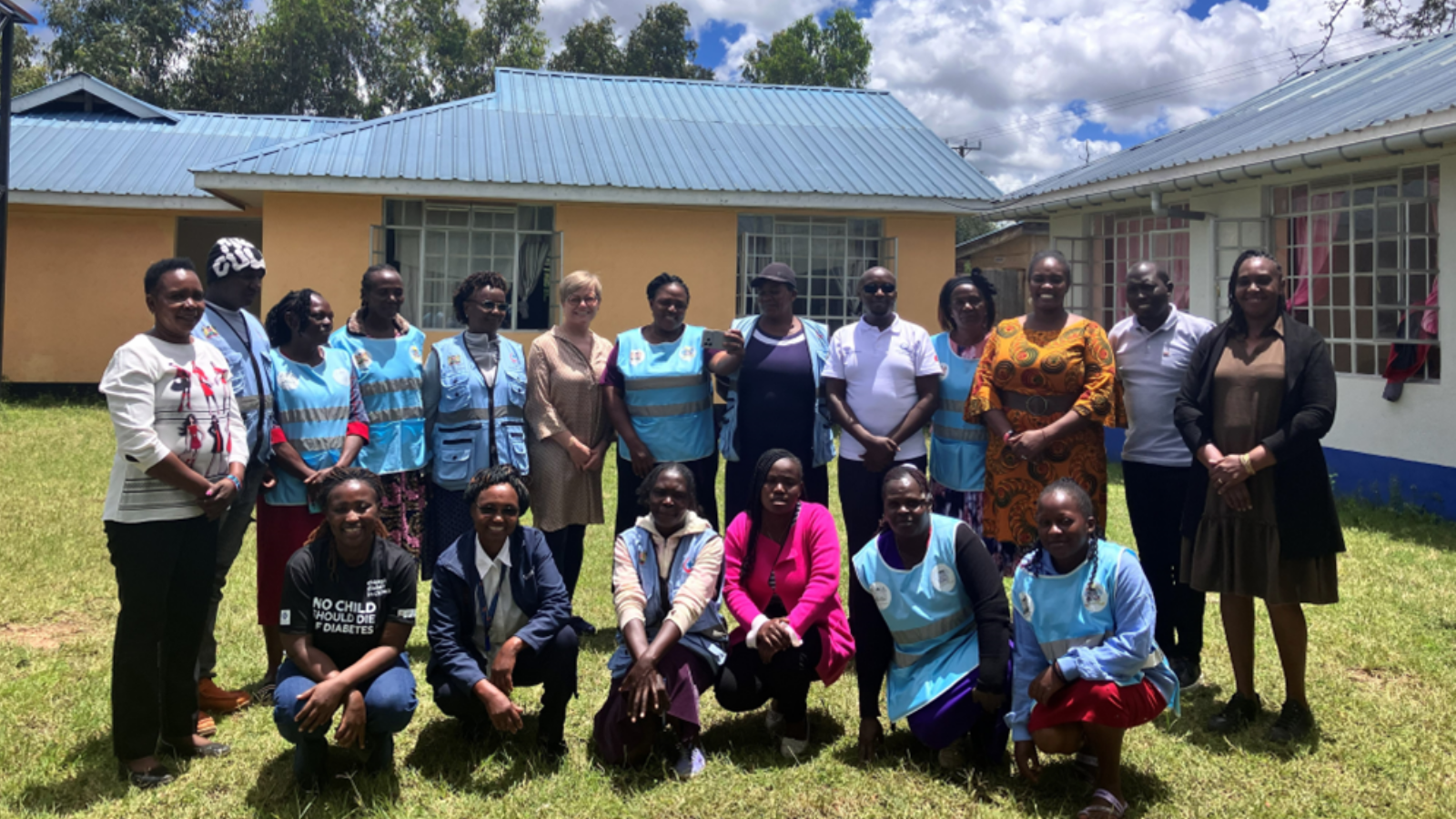
While the support groups anchor care at facility level, community health promoters (CHPs) are what keep patients connected once they return home. The CHPs are trained through the WDF-supported project. They are an essential link between the clinic, the support groups, and the wider community.
CHPs work at household level. They know the community intimately, who lives where, which families are affected, and who may be struggling to attend follow-ups.” They know who is who,” Lilian says, describing how this local knowledge allows them to find patients who might otherwise be lost to care. When patients cannot be reached by phone or miss appointments, Lilian explains that the CHPs are the ones following up. This role becomes even more pivotal for those who are hard to reach and are in vulnerable situations. CHPs are the ones “able to bring the patient back,” to the clinic and the support group.
Lilian does not hesitate when asked about their importance. “They are the pillars,” she says, recognising that the depth of connection makes them the key people in sustaining long-term NCD care at community level.
“I have other people who are living with the condition like me”
For participants, these support groups can be life changing. “I have a patient who told me that ever since he came to the support group, he now feels at home,” recalls Lilian. “He found that he is not alone.” Surrounded by others living with the same condition, he discovered a sense of belonging, “He found that, ‘hey, I have other people who are living with the condition like me,’” Lilian recalls.
These groups create a sense of community. They build a safe space to express feelings and break down barriers. This helps improve participants' mental health by reducing stress and isolation. The support groups are a source of hope and motivation.
This same patient further confided in Lilian, saying, "Doctor, you did me so great, and I will forever be grateful, because this support group has really impacted me."
Nevertheless, these groups face challenges. Health centres often lack space, so meetings are sometimes outside, using rented chairs and tents when possible. Meetings continue regardless of the weather, ensuring support for all. Medical resources for diabetes and NCDs can run low as demand grows. The groups shared commitment keeps them going, they are determined to keep supporting each other.
This shared commitment is central to Lilian’s work. She empowers patients to understand their bodies and advocate for themselves. She supports prevention, ensures those with diabetes or hypertension aren’t alone, and hopes for fewer diagnoses in the future. She wants people to be better equipped in every way and to always have a community to rely on.
